Designing the Digital Experience

A responsive redesign that makes visit planning clearer while keeping the farm's character.

​

My role UX/UI Designer & Brand Strategist

​

Year 2026

​

The Problem & Context

​

Sun High Orchards lacked a cohesive, accessible digital experience. Its existing branding worked primarily in print and signage, making it difficult to translate into a modern, responsive interface across desktop and mobile.

​

Using insights from discovery and user research, I redesigned the digital experience to make visit planning clearer, improve the visibility of products and activities, and modernize the interface while preserving the farm’s authentic character.

​

Design Goals

​

  • Make visit planning effortlessSurface hours, location, pricing, and seasonal information clearly.
  • Improve visibility of offeringsMake products, animals, activities, and seasonal experiences easier to discover.
  • Prioritize mobile usabilityCreate a clearer, more intuitive experience for visitors planning on smartphones.
  • Modernize without losing authenticityBuild a cohesive visual system while preserving Sun High’s family-owned character.

​

Information Architecture

​

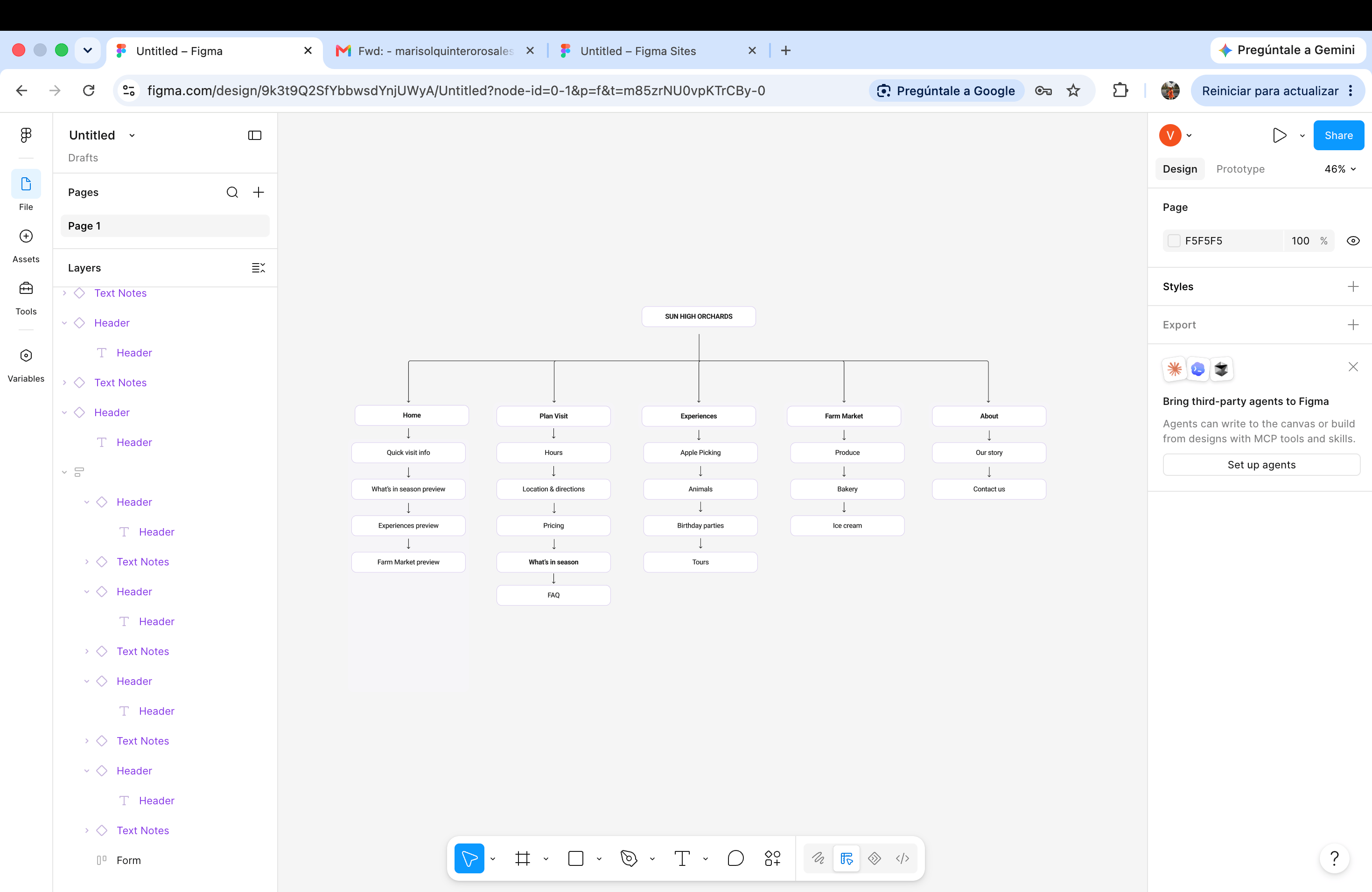
Research findings informed a simplified site structure organized around the information visitors need most when planning a visit.

​

​

​

​

​

Wireframes

​

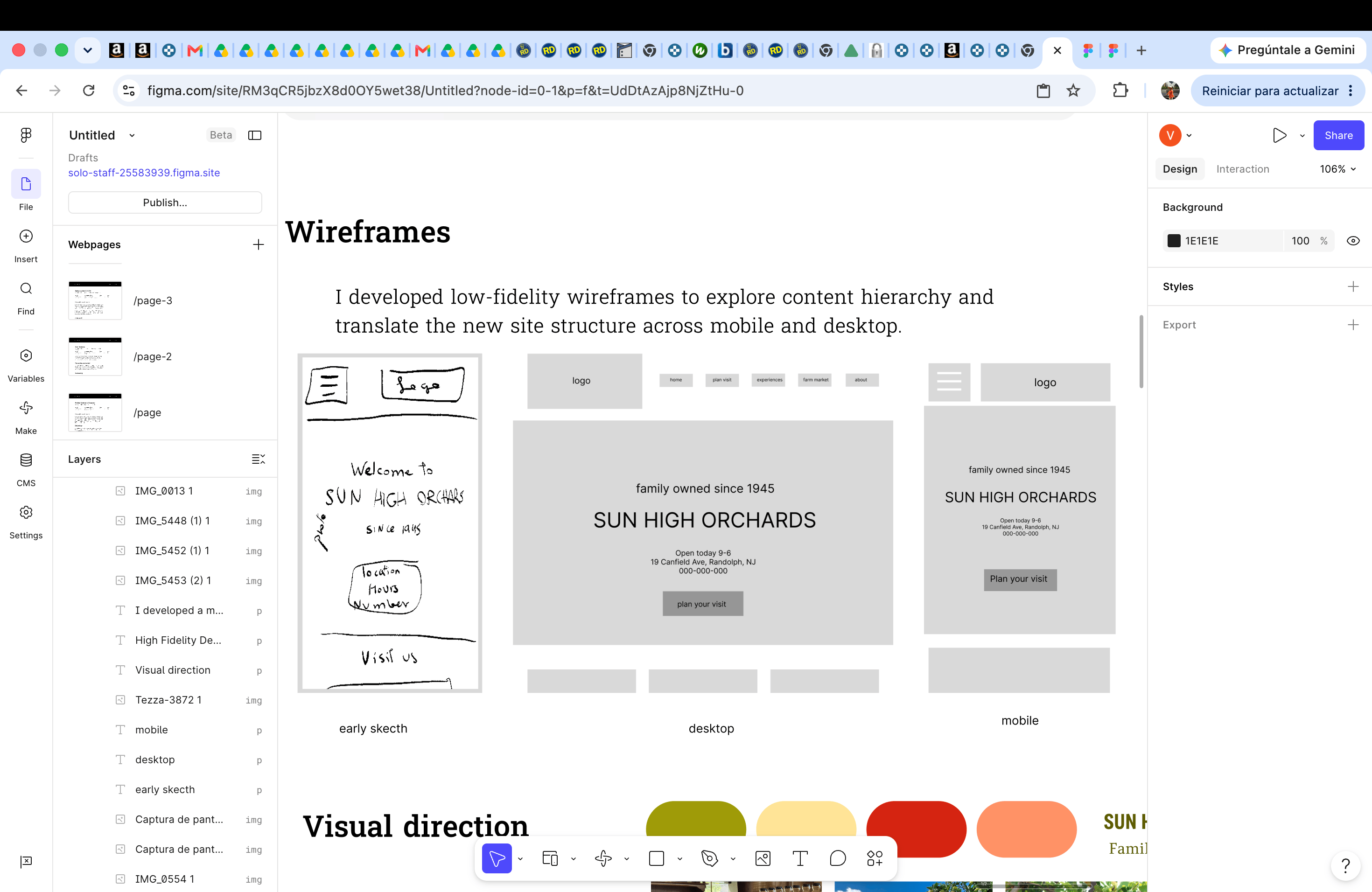
I developed low-fidelity wireframes to explore content hierarchy and translate the new site structure across mobile and desktop.

​

​

Visual Direction

​

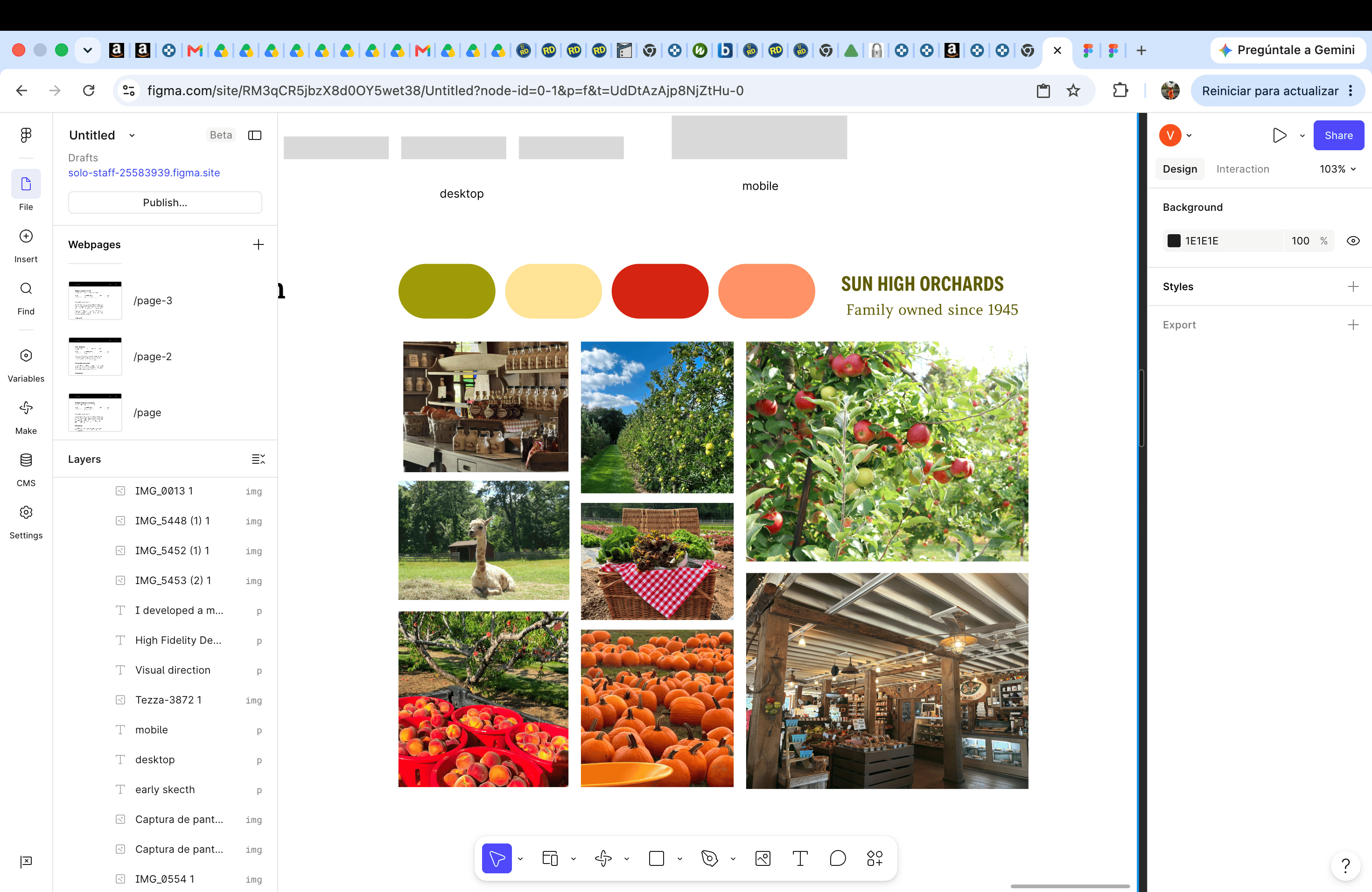
I developed a visual direction that felt warm, established, and authentic while supporting a more contemporary digital experience. The direction was shared with the farm owners to ensure it aligned with the character they wanted to preserve.

High Fidelity Design

​

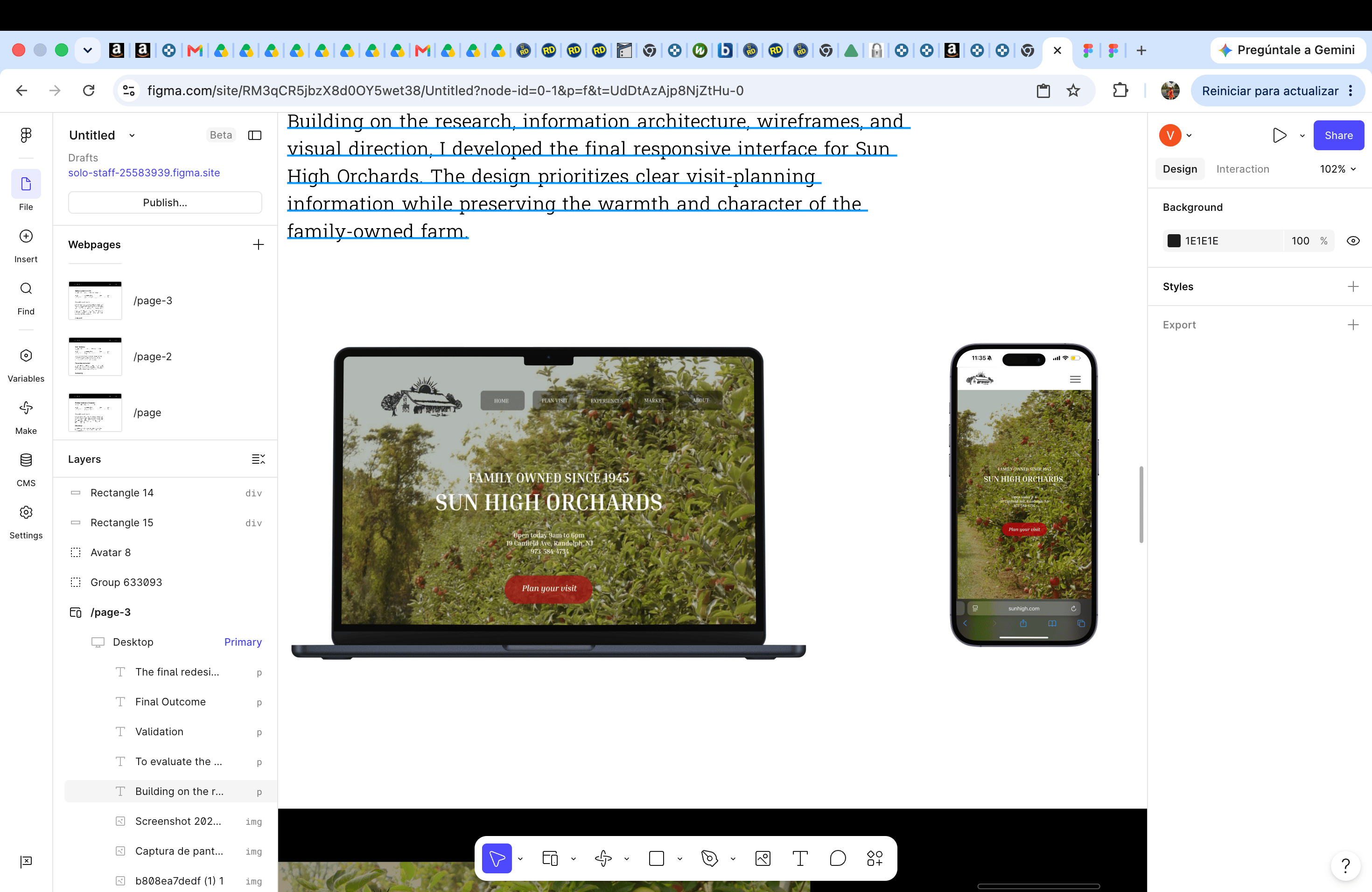
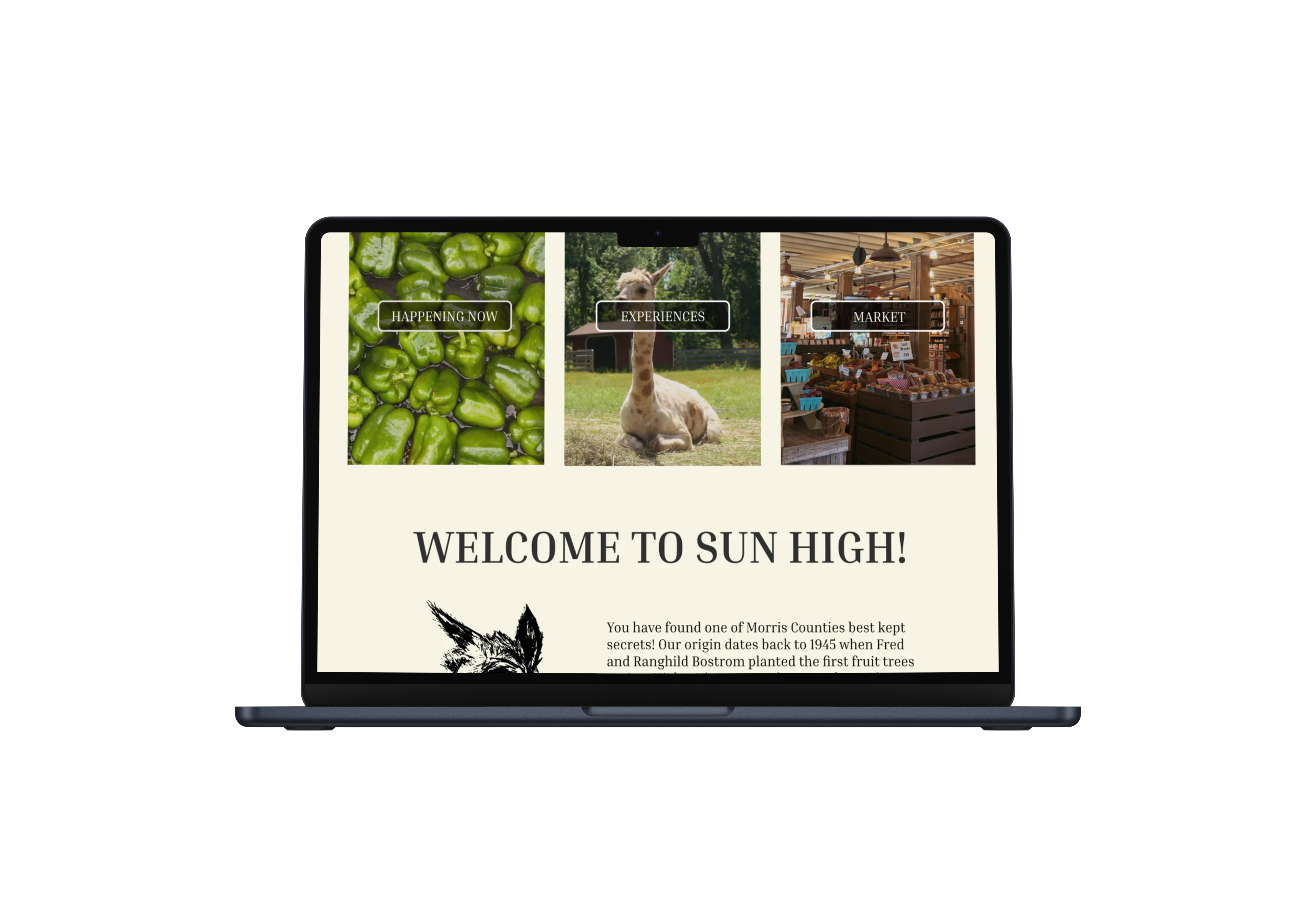
Building on the research, information architecture, wireframes, and visual direction, I developed the final responsive interface for Sun High Orchards. The design prioritizes clear visit-planning information while preserving the warmth and character of the family-owned farm.

Validation

​

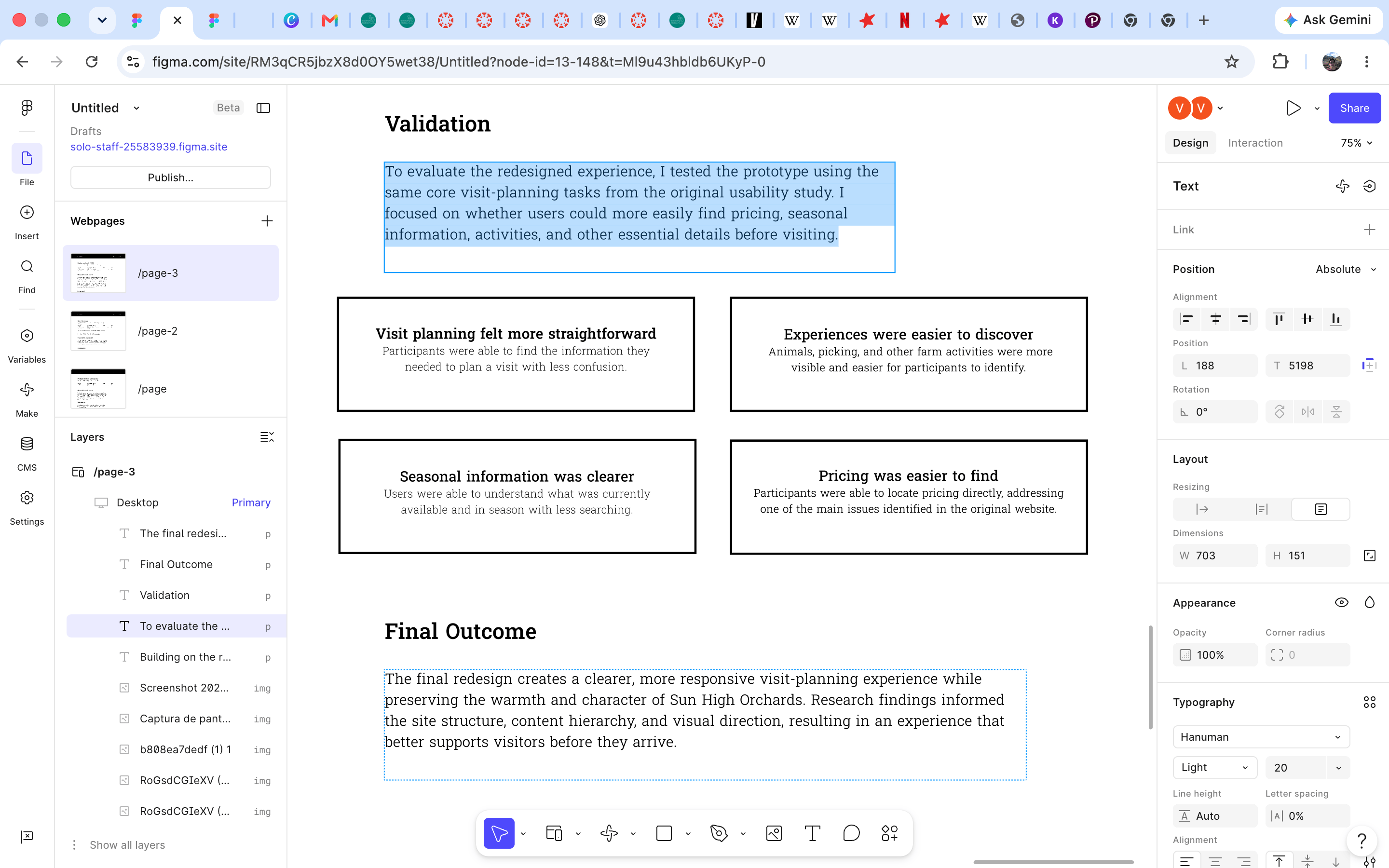
I retested the redesigned prototype using the same core visit-planning tasks from the original usability study, focusing on pricing, seasonal information, activities, and other essential details.

​

Final Outcome

​

The redesign turns a hard-to-navigate site into a clear planning tool: visitors can find pricing, hours, and what's in season quickly. The owners approved the design, and it's planned to launch for the 2027 season.

​

The Problem & Context

​

Sun High Orchard is a family-owned farm and seasonal destination in New Jersey. The farm wanted to improve its existing website, but there was no clearly defined digital strategy or project scope for the redesign.

The challenge was to understand the business needs, evaluate the existing experience, and identify which problems and opportunities should shape the redesign.

​

Methodology

​

My challenge was to first get a view about the big picture and then start understanding specific scenarios. That's why I planned the following steps for the project:

​

• Desk research about user flows and product interfaces

Interviews with stakeholders

• Desk research about past qualitative and quantitative data

Website audit

Competitive analysis

Business analysis

• Service blueprint and journeys analysis 

• Action plan delivery

​

For this project I noticed that documentation would be a key point. To organize the whole process I used Notion as a "project diary" and Miro and Figma to make it more visual the service blueprint and other journey's analysis.

​

​

The Problem & Context

​

Sun High Orchard is a family-owned farm and seasonal destination in New Jersey. The farm wanted to improve its existing website, but there was no clearly defined digital strategy or project scope for the redesign.

The challenge was to understand the business needs, evaluate the existing experience, and identify which problems and opportunities should shape the redesign.

​

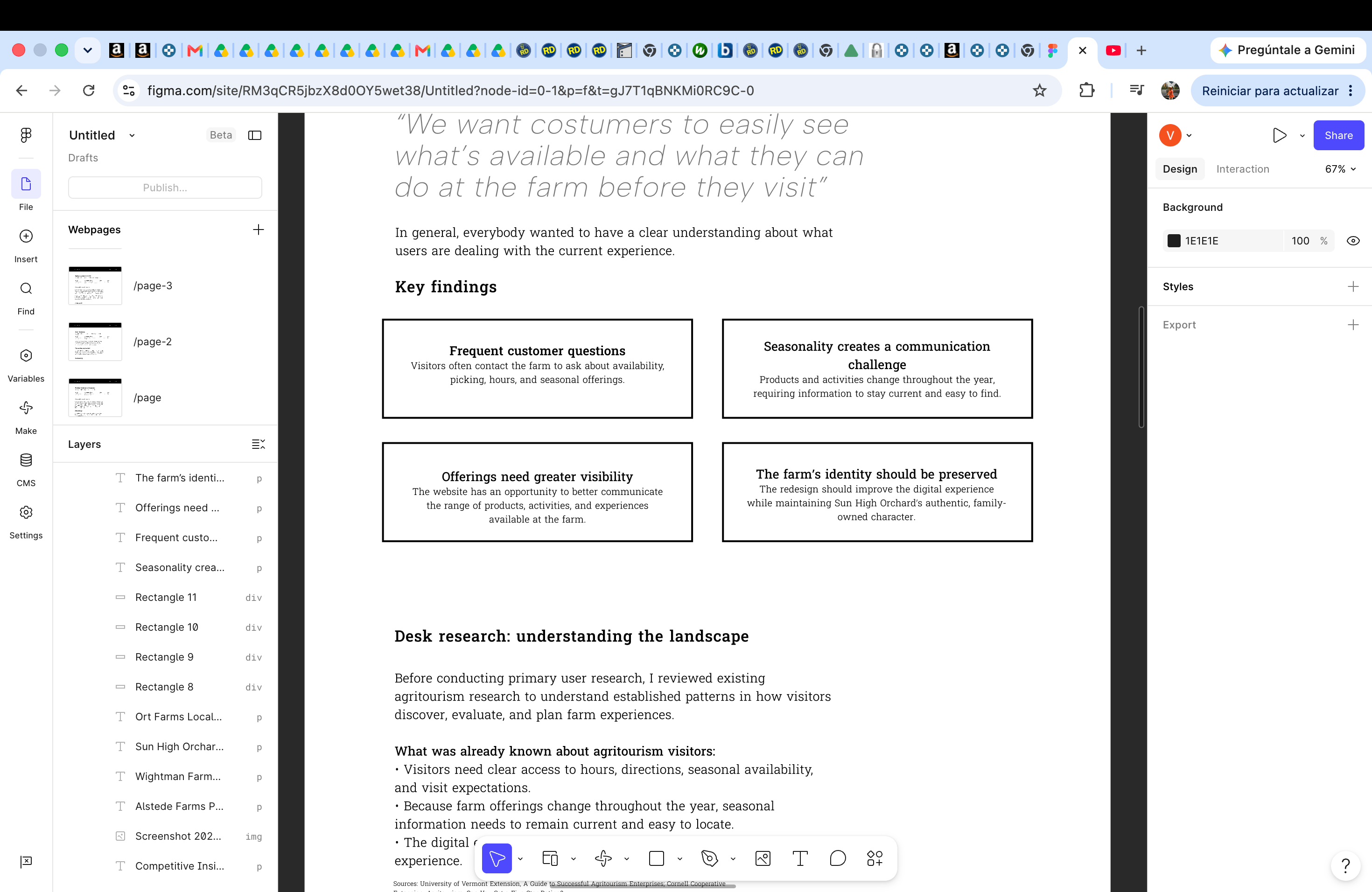
Key Findings

​

​

​

​

​

​

​

The Problem & Context

​

Sun High Orchard is a family-owned farm and seasonal destination in New Jersey. The farm wanted to improve its existing website, but there was no clearly defined digital strategy or project scope for the redesign.

The challenge was to understand the business needs, evaluate the existing experience, and identify which problems and opportunities should shape the redesign.

​

Methodology

​

My challenge was to first get a view about the big picture and then start understanding specific scenarios. That's why I planned the following steps for the project:

​

• Desk research about user flows and product interfaces

Interviews with stakeholders

• Desk research about past qualitative and quantitative data

Website audit

Competitive analysis

Business analysis

• Service blueprint and journeys analysis 

• Action plan delivery

​

For this project I noticed that documentation would be a key point. To organize the whole process I used Notion as a "project diary" and Miro and Figma to make it more visual the service blueprint and other journey's analysis.

​

​

The Problem & Context

​

Sun High Orchard is a family-owned farm and seasonal destination in New Jersey. The farm wanted to improve its existing website, but there was no clearly defined digital strategy or project scope for the redesign.

The challenge was to understand the business needs, evaluate the existing experience, and identify which problems and opportunities should shape the redesign.

​

Key Findings

​

​

​

​

​

​

​

Desk research: understanding the landscape

​

Before conducting primary user research, I reviewed existing agritourism research to understand established patterns in how visitors discover, evaluate, and plan farm experiences.

​

What was already known about agritourism visitors:

• Visitors need clear access to hours, directions, seasonal availability, and visit expectations.

• Because farm offerings change throughout the year, seasonal information needs to remain current and easy to locate.

• The digital experience helps set expectations for the physical farm experience.
​

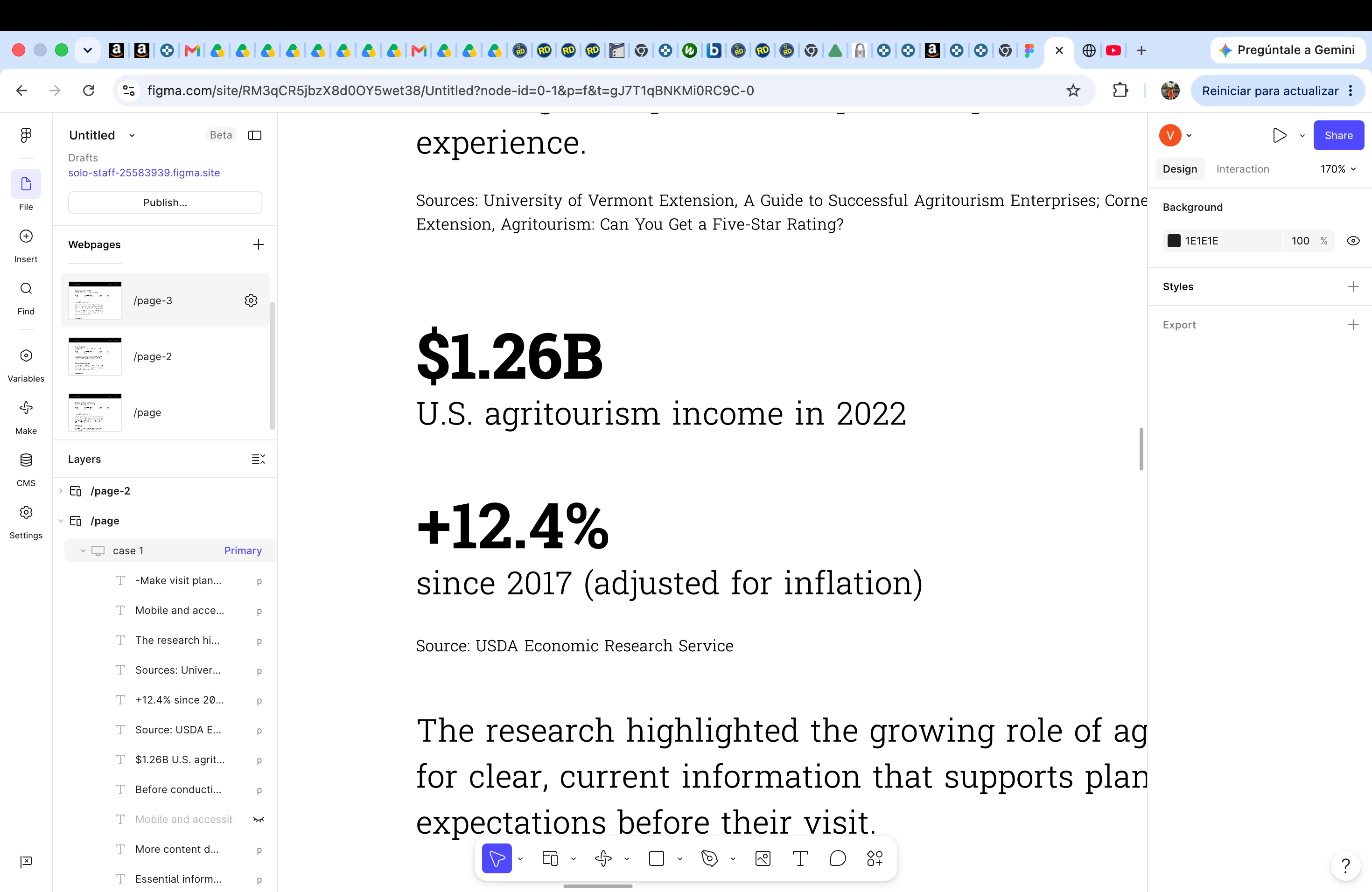
The research highlighted the growing role of agritourism and the need for clear, current information that supports planning and sets expectations before their visit.

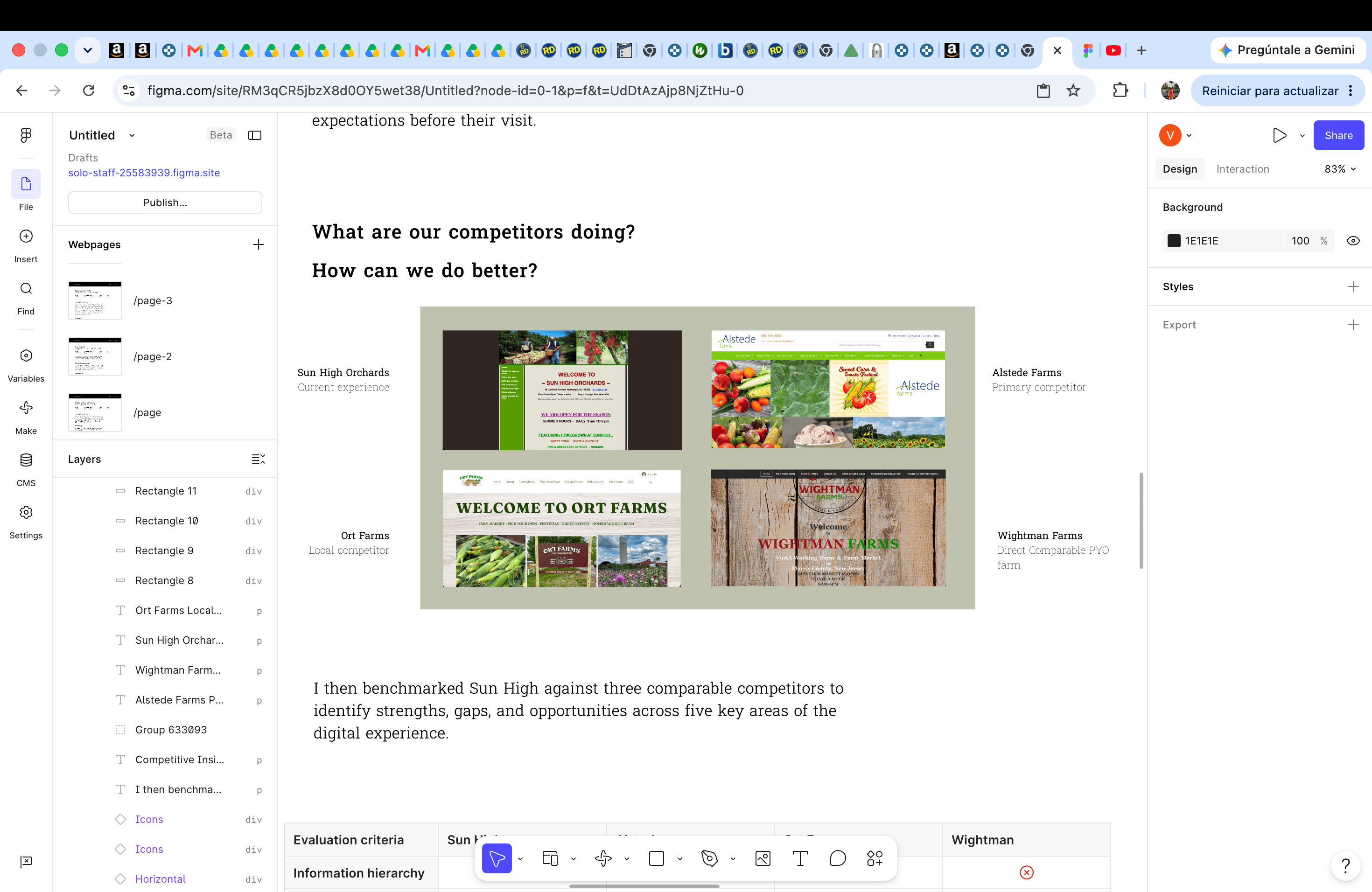
What are our competitors doing?How can we do better?

​

​

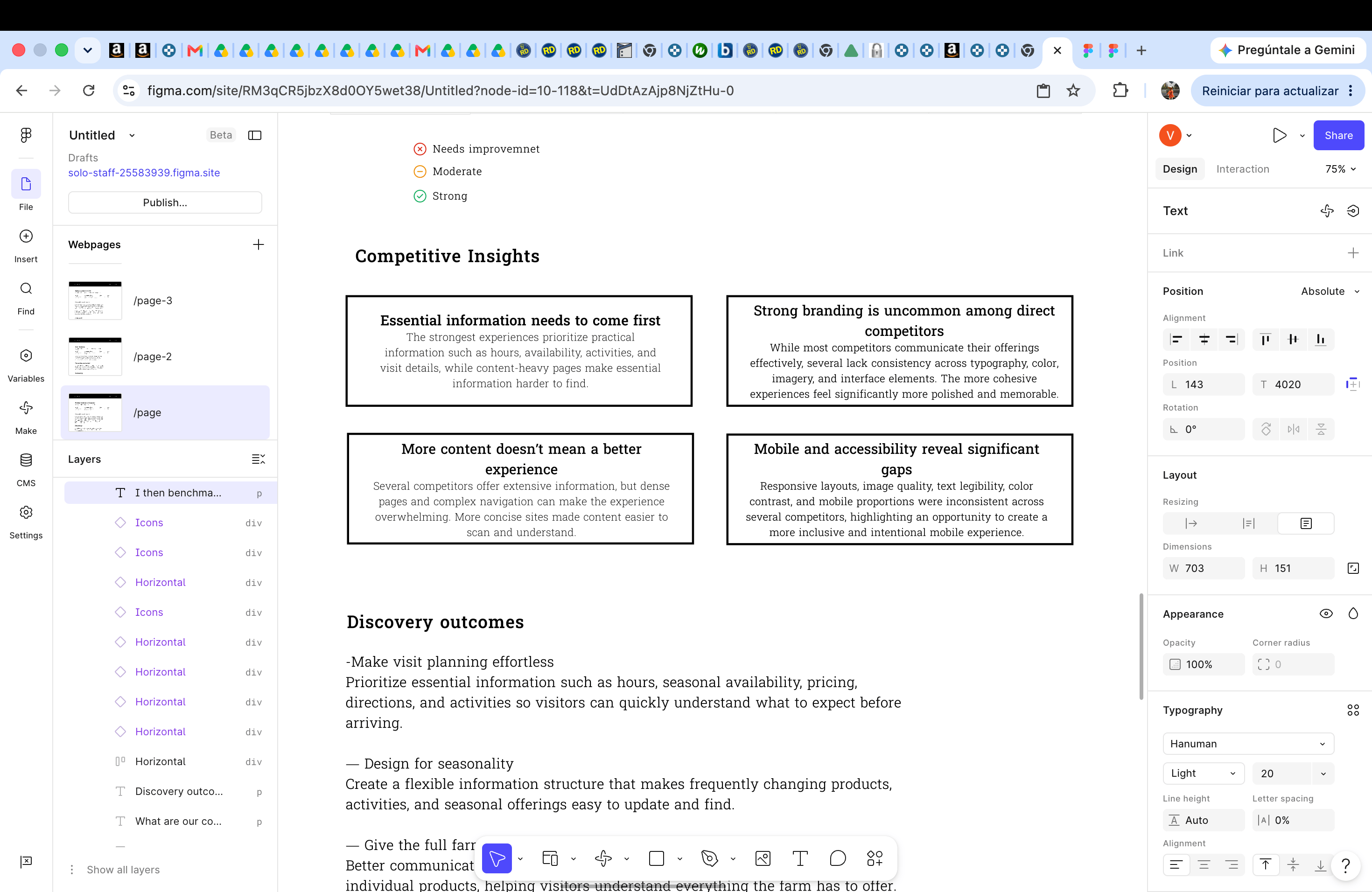
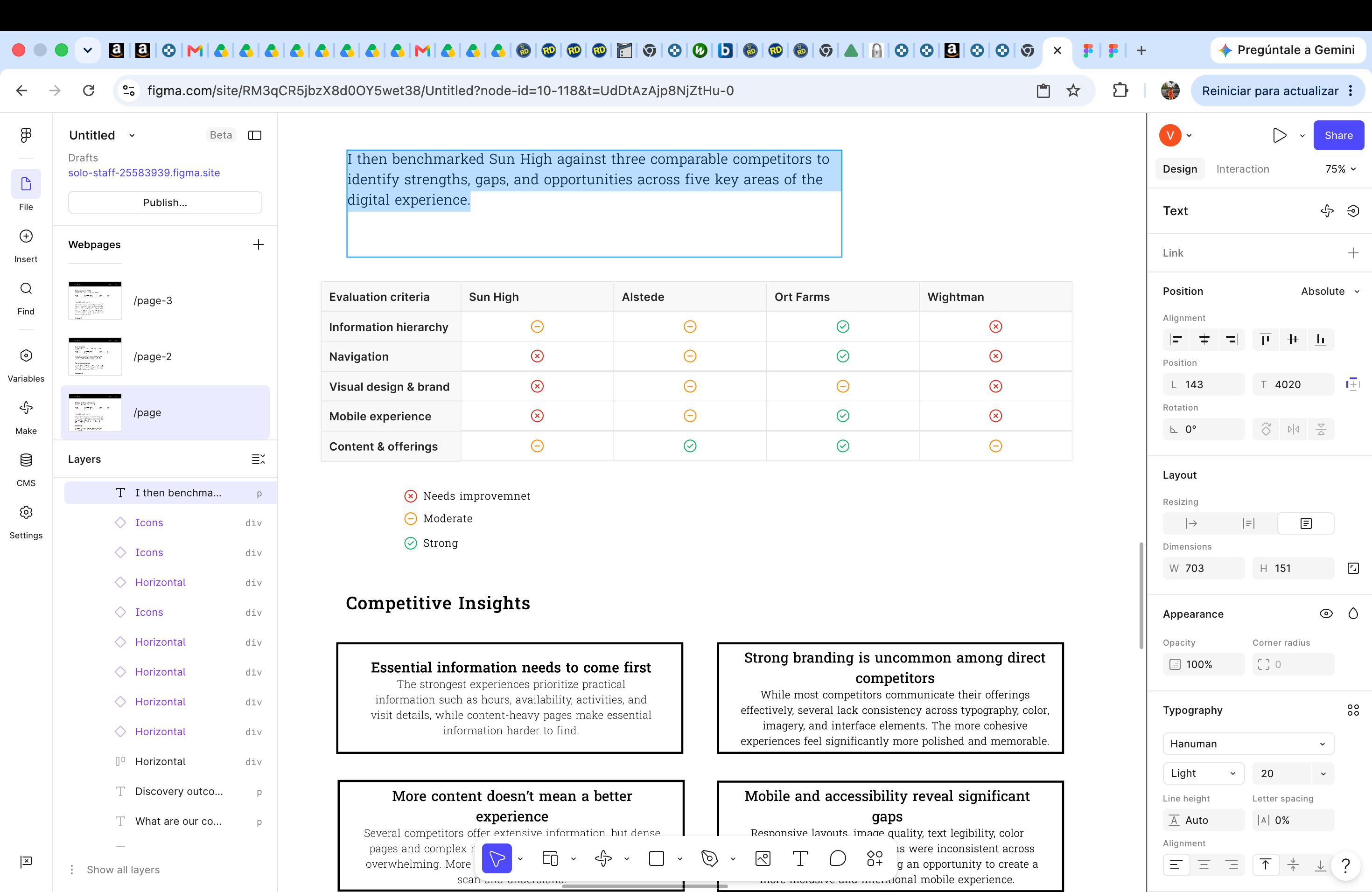
I then benchmarked Sun High against three comparable competitors to identify strengths, gaps, and opportunities across five key areas of the digital experience.

Competitive Insights

​

​

Discovery outcomes

​

-Make visit planning effortless

Prioritize essential information such as hours, seasonal availability, pricing, directions, and activities so visitors can quickly understand what to expect before arriving.

​

— Design for seasonality

Create a flexible information structure that makes frequently changing products, activities, and seasonal offerings easy to update and find.

​

— Give the full farm experience greater visibility

Better communicate the range of experiences available at Sun High beyond individual products, helping visitors understand everything the farm has to offer.

​

— Modernize without losing authenticity

Improve navigation, mobile usability, accessibility, and visual consistency while preserving Sun High’s established family-owned character.

​

These outcomes established the strategic direction for the redesign and informed the next phase: primary user research.

​

Designing the Digital Experience

A responsive redesign that makes visit planning clearer while keeping the farm's character.

​

My role UX/UI Designer & Brand Strategist

​

Year 2026

​

The Problem & Context

​

Sun High Orchards lacked a cohesive, accessible digital experience. Its existing branding worked primarily in print and signage, making it difficult to translate into a modern, responsive interface across desktop and mobile.

​

Using insights from discovery and user research, I redesigned the digital experience to make visit planning clearer, improve the visibility of products and activities, and modernize the interface while preserving the farm’s authentic character.

​

Design Goals

​

  • Make visit planning effortlessSurface hours, location, pricing, and seasonal information clearly.
  • Improve visibility of offeringsMake products, animals, activities, and seasonal experiences easier to discover.
  • Prioritize mobile usabilityCreate a clearer, more intuitive experience for visitors planning on smartphones.
  • Modernize without losing authenticityBuild a cohesive visual system while preserving Sun High’s family-owned character.

​

Information Architecture

​

Research findings informed a simplified site structure organized around the information visitors need most when planning a visit.

​

​

​

​

Wireframes

​

I developed low-fidelity wireframes to explore content hierarchy and translate the new site structure across desktop and mobile.

​

​

Visual Direction

​

I developed a visual direction that felt warm, established, and authentic while supporting a more contemporary digital experience. The direction was shared with the farm owners to ensure it aligned with the character they wanted to preserve.

​

High Fidelity Design

​

Building on the research, information architecture, wireframes, and visual direction, I developed the final responsive interface for Sun High Orchards. The design prioritizes clear visit-planning information while preserving the warmth and character of the family-owned farm.

​

​

​

Validation

​

I retested the redesigned prototype using the same core visit-planning tasks from the original usability study, focusing on pricing, seasonal information, activities, and other essential details.

​

​

Final Outcome

​

The redesign turns a hard to navigate site into a clear planning tool: visitors can find pricing, hours, and what's in season quickly. The owners approved the design, and it's planned to launch for the 2027 season.

​

​

The Problem & Context

​

Sun High Orchard is a family-owned farm and seasonal destination in New Jersey. The farm wanted to improve its existing website, but there was no clearly defined digital strategy or project scope for the redesign.

The challenge was to understand the business needs, evaluate the existing experience, and identify which problems and opportunities should shape the redesign.

​

Methodology

​

My challenge was to first get a view about the big picture and then start understanding specific scenarios. That's why I planned the following steps for the project:

​

• Desk research about user flows and product interfaces

Interviews with stakeholders

• Desk research about past qualitative and quantitative data

Website audit

Competitive analysis

Business analysis

• Service blueprint and journeys analysis 

• Action plan delivery

​

For this project I noticed that documentation would be a key point. To organize the whole process I used Notion as a "project diary" and Miro and Figma to make it more visual the service blueprint and other journey's analysis.

​

​

The Problem & Context

​

Sun High Orchard is a family-owned farm and seasonal destination in New Jersey. The farm wanted to improve its existing website, but there was no clearly defined digital strategy or project scope for the redesign.

The challenge was to understand the business needs, evaluate the existing experience, and identify which problems and opportunities should shape the redesign.

​

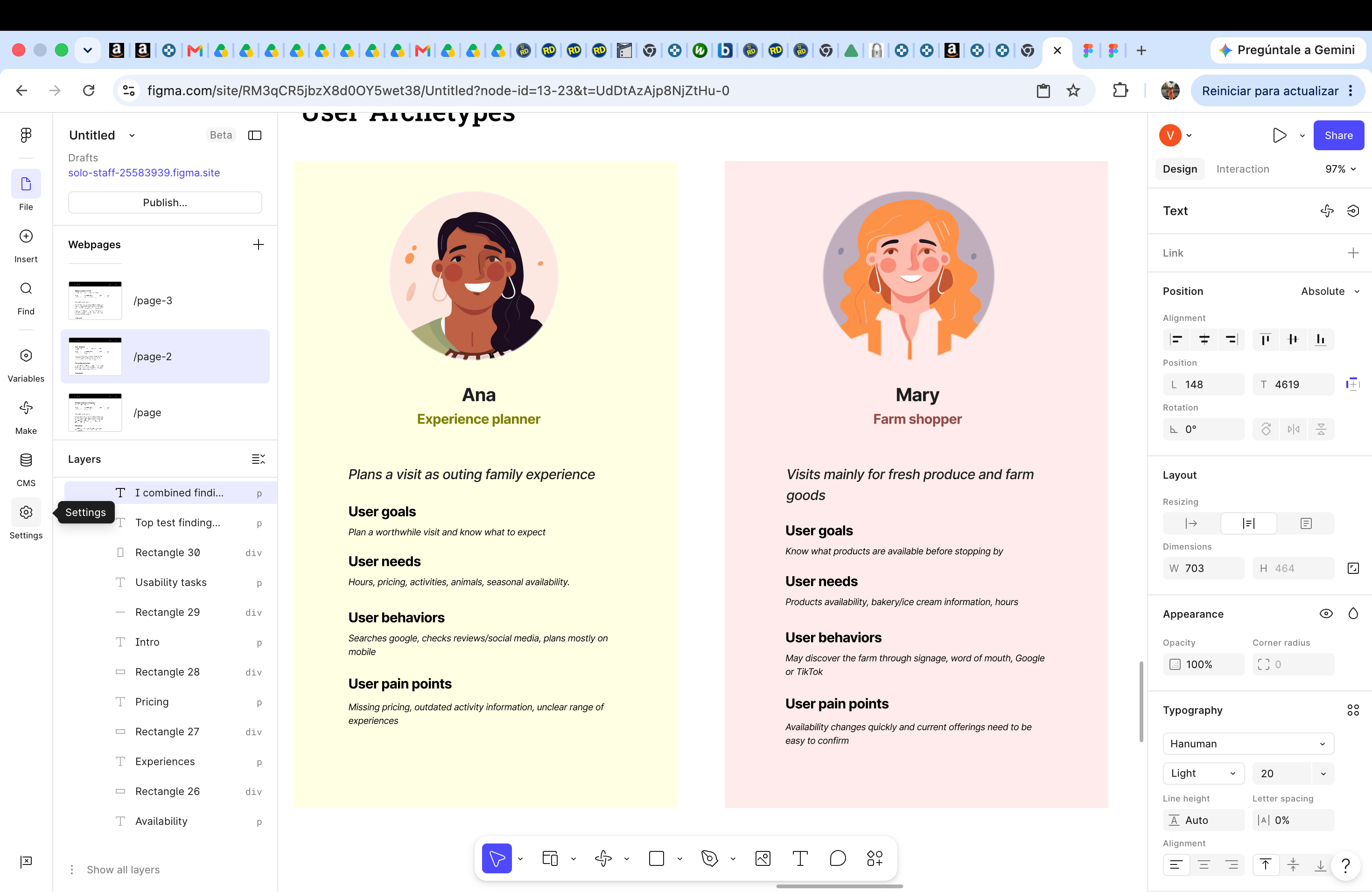
Key Findings

​

​

​

​

​

​

​

The Problem & Context

​

Sun High Orchard is a family-owned farm and seasonal destination in New Jersey. The farm wanted to improve its existing website, but there was no clearly defined digital strategy or project scope for the redesign.

The challenge was to understand the business needs, evaluate the existing experience, and identify which problems and opportunities should shape the redesign.

​

Methodology

​

My challenge was to first get a view about the big picture and then start understanding specific scenarios. That's why I planned the following steps for the project:

​

• Desk research about user flows and product interfaces

Interviews with stakeholders

• Desk research about past qualitative and quantitative data

Website audit

Competitive analysis

Business analysis

• Service blueprint and journeys analysis 

• Action plan delivery

​

For this project I noticed that documentation would be a key point. To organize the whole process I used Notion as a "project diary" and Miro and Figma to make it more visual the service blueprint and other journey's analysis.

​

​

The Problem & Context

​

Sun High Orchard is a family-owned farm and seasonal destination in New Jersey. The farm wanted to improve its existing website, but there was no clearly defined digital strategy or project scope for the redesign.

The challenge was to understand the business needs, evaluate the existing experience, and identify which problems and opportunities should shape the redesign.

​

Key Findings

​

​

​

​

​

​

​

Desk research: understanding the landscape

​

Before conducting primary user research, I reviewed existing agritourism research to understand established patterns in how visitors discover, evaluate, and plan farm experiences.

​

What was already known about agritourism visitors:

• Visitors need clear access to hours, directions, seasonal availability, and visit expectations.

• Because farm offerings change throughout the year, seasonal information needs to remain current and easy to locate.

• The digital experience helps set expectations for the physical farm experience.

​

The research highlighted the growing role of agritourism and the need for clear, current information that supports planning and sets expectations before their visit.

What are our competitors doing?How can we do better?
​

​

I then benchmarked Sun High against three comparable competitors to identify strengths, gaps, and opportunities across five key areas of the digital experience.

Competitive Insights
​

​

Discovery outcomes

​

-Make visit planning effortless

Prioritize essential information such as hours, seasonal availability, pricing, directions, and activities so visitors can quickly understand what to expect before arriving.

​

— Design for seasonality

Create a flexible information structure that makes frequently changing products, activities, and seasonal offerings easy to update and find.

​

— Give the full farm experience greater visibility

Better communicate the range of experiences available at Sun High beyond individual products, helping visitors understand everything the farm has to offer.

​

— Modernize without losing authenticity

Improve navigation, mobile usability, accessibility, and visual consistency while preserving Sun High’s established family-owned character.

​

These outcomes established the strategic direction for the redesign and informed the next phase: primary user research.

​